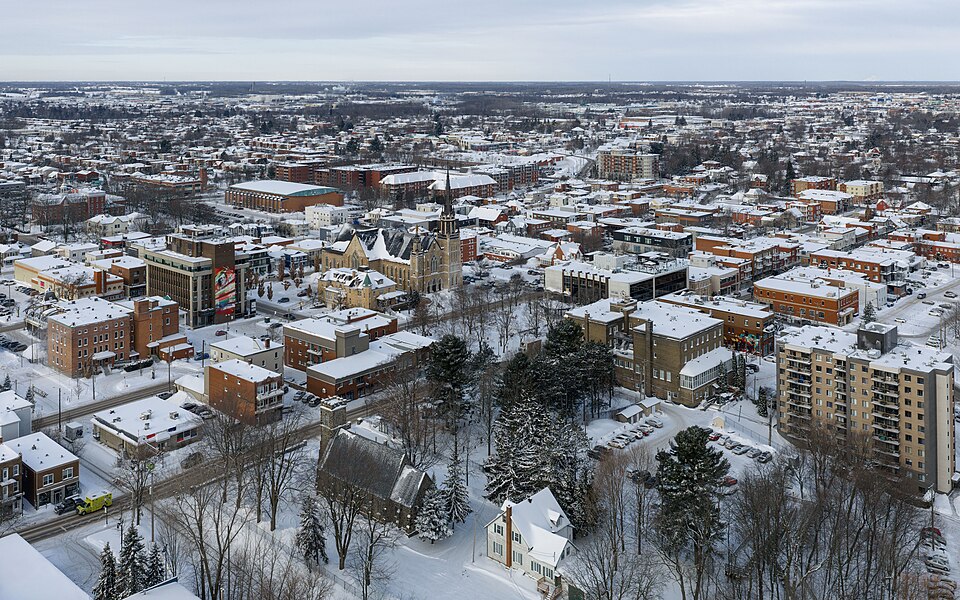
Terrebonne sits at City Score rank #273 with a standing of 44%, from 5 of 8 open-data pillars (tax, construction, connectivity, indoor air, water, seismic hazard, growth, safety). Missing pillars score at median standing so thin coverage cannot inflate the rank. Rising 29 places versus 2022 (#302 → #273).
Latest owned placements: indoor radon rank #74 of 327 at 126 Bq/m³ survey mean. Full tables and method notes live on each study edition; atlas readings for the same slug open from the topic buttons.
On the latest OpenStats pass, Terrebonne carries a City Score standing of 44% (rank #273 of 343) with 5 of 8 pillars observed. That sits 3 points below the Quebec peer average across 34 ranked cities. Within Quebec, Terrebonne ranks #24 of 34 on City Score.
The strongest signal in the current chart is broadband download (ISED seed tier) (standing 72%, rank #98 of 343, raw score 845.8). The weakest observed pillar is drinking-water hardness (standing 9%, rank #32 of 343).
Drinking-water hardness on the water atlas reads 259 mg/L as CaCO₃ for Terrebonne. Compare that figure to the hardness pillar on the chart and to the national hardness guide on the hub.